
 DAVENNIE LABS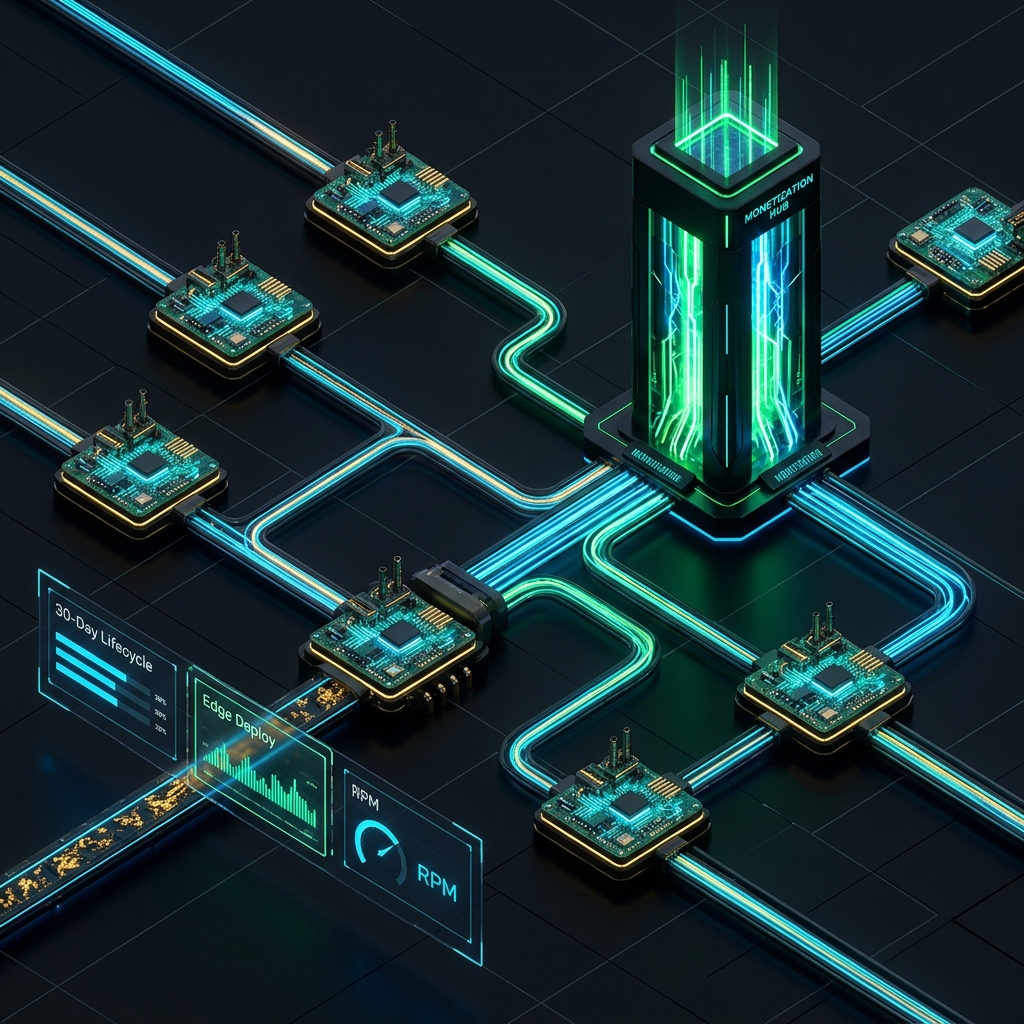
Author: DAVENNIE-LABS | Category: Digital Venture Studio | Read Time: 6 Minutes
In the Davennie Labs ecosystem, we do not view “startups” as creative endeavors. We view them as industrial output units. If your venture isn’t designed to be churned out, optimized, and automated within a 30-day lifecycle, you aren’t building a company — you’re building a hobby that eats your capital.
To scale a Digital Venture Studio, you must replace human decision-making with Architectural Constraints.
1. The Startup Foundry Blueprint: Commodity Scaling
Most founders fail because they attempt to reinvent the wheel for every project. The Davennie Labs standard is to utilize Foundry Templates. Whether it is a local service directory, a PWA marketplace, or a programmatic SEO engine, the underlying architecture remains consistent:
- Standardized Stack: Astro (for speed), Cloudflare (for edge deployment), and Supabase (for persistent state).
- Decoupled Logic: The front-end serves as a high-conversion gateway, while the business logic remains modular.
- Automated Deployment: CI/CD pipelines ensure that pushing a new venture to production takes minutes, not weeks.
2. Eliminating Tech-Debt with Zero-Trust Architecture
When you manage a fleet of digital assets, your primary threat is not the competition — it’s the instability of your own stack. We implement a Zero-Trust Infrastructure to ensure performance and uptime:
“Trust no user input, verify every asset, and cache everything at the edge.”
By using RAG (Retrieval-Augmented Generation) subsystems, we ensure that AI-generated content — often prone to hallucination — is anchored to verified data sources. This transforms your content from “generated noise” into “high-authority assets” that search engines prioritize and users trust.
3. The Industrial Loop: Efficiency Metrics
To maintain a high-yield output, every venture must pass through the Conversion Lifecycle:
| Stage | Action | Metric |
|---|---|---|
| Leads | Aggressive capture via Telegram/Social | CAC (Cost Per Acquisition) |
| Relationship | High-value, low-friction utility interaction | Time-on-Site (Dwell Time) |
| Conversion | Gateway-prompted value exchange | Revenue Per Mille (RPM) |
By optimizing for “Dwell Time,” we keep users engaged within our ecosystem. This stability allows our ad-tech layers to perform without the volatility seen in standard web traffic.
4. Executing the “Bombing” Psychology
In a Digital Venture Studio, “bombing” is the operational term for market saturation. It is the deployment of hyper-targeted, utility-heavy assets into a specific niche.
Instead of building one large, complex platform, we deploy a “cluster” of micro-services that all feed back into a primary monetization hub. This creates a moat around your niche — even if one site fluctuates, the cluster remains a resilient, revenue-generating engine.
🚀 The Bottom Line
The difference between a failing project and a digital asset is Infrastructure Ownership. When you own the pipeline, you own the revenue. AI gives you the leverage to build faster, but your architectural discipline determines if that build survives the first 24 hours of traffic.
Ready to institutionalize your venture process?
🔗 Join the Davennie Labs WhatsApp Community to access the Foundry Templates for your next build.
Related Blueprint: Richbrain RAG Subsystem Integration: Anchoring Your AI Assets
Related Blueprint: Digital Venture Studio: Automating the Launch Lifecycle
Join the Leverage Operator Newsletter
Get zero-trust architectures, programmatic SEO blueprints, and automated workflows delivered directly to your inbox. No fluff, just blueprints.